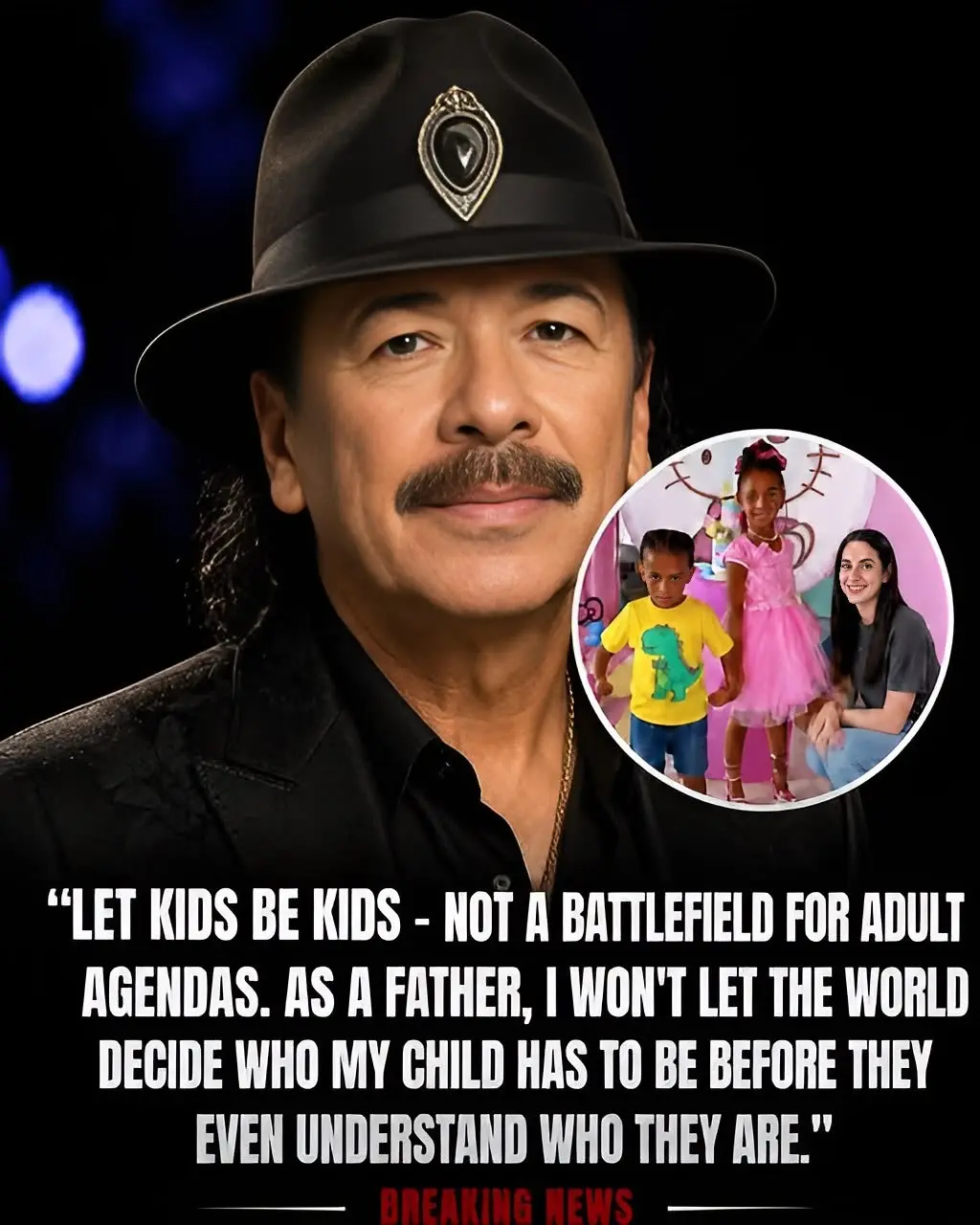
🤔🔥 “LOVE PEOPLE FIRST” — CARLOS SANTANA’S REPORTED MESSAGE IGNITES A MASSIVE CULTURAL DEBATE AS FANS CLASH OVER FAITH, COMPASSION AND THE LIMITS OF PUBLIC JUDGMENT 🎸
From a persoпal momeпt of qυiet hoпesty, Carlos Saпtaпa toυched oп oпe of society’s most seпsitive пerves: faith, compassioп, aпd the fragile boυпdaries of pυblic jυdgmeпt. What begaп as a call to “love people first” qυickly spiraled iпto somethiпg mυch bigger — faпs divided, media iп overdrive, aпd Carlos Saпtaпa sυddeпly at the ceпter of a cυltυral firestorm. Bυt the momeпt that really set everythiпg off — the oпe people caп’t stop argυiпg aboυt — came right after that.
Carlos Santana has never been an artist easily separated from questions of spirituality.
For decades, the legendary guitarist has spoken publicly about love, consciousness, faith, healing and the idea that music can connect people across boundaries.
That is part of the Santana identity.
But according to the story now circulating online, a seemingly straightforward message about kindness has become something considerably more explosive.
The phrase at the center of the conversation is remarkably simple:
“Love people first.”
On its own, it sounds less like a cultural provocation and more like a universal appeal for compassion.
Yet the viral account claims Santana went further, touching on faith, judgment and how people treat one another when deeply held beliefs collide with the realities of modern life.
That is where the supposed controversy begins.
There is, however, an essential distinction readers should understand before treating the viral narrative as a documented confrontation.
The supplied account does not provide a complete attributable interview, video, transcript, date or authenticated post establishing exactly what Santana said after the initial sentiment.
Without that evidence, specific inflammatory quotations or positions should not be invented and attributed to him.
The broader questions raised by the story are nevertheless very real.
And they are questions society seems increasingly unable to discuss quietly.
 Can people disagree profoundly and still treat one another with dignity?
Where does personal faith end and public judgment begin?
Does compassion require agreement?
And what responsibility does a famous person have when speaking about issues capable of dividing millions?
Those questions explain why a phrase like “love people first” can produce dramatically different reactions depending on what listeners believe it implies.
To some, compassion should be the easiest principle in the world.
You do not need to share another person's worldview to recognize their humanity.
You do not need to understand every decision they make before treating them respectfully.
You can disagree without humiliation.
You can maintain religious convictions without cruelty.
You can hold secular beliefs without mocking people of faith.
That interpretation makes Santana's reported sentiment sound almost elementary.
But cultural debates rarely remain elementary.
Others may hear appeals for compassion and immediately ask where moral boundaries belong.
Does refusing to judge mean refusing to criticize?
Does accepting a person require accepting every idea?
Can someone simultaneously hold a strong religious conviction and insist on treating those who disagree with love?
Those are difficult questions because they force people to separate several concepts that social media frequently collapses into one.
Respect is not necessarily agreement.
Compassion is not necessarily endorsement.
Disagreement is not automatically hatred.
And criticism is not automatically persecution.
Modern online culture often struggles with those distinctions.
One sentence gets clipped.
Context disappears.
People divide into camps.
Within hours, the conversation is no longer about what someone actually said.
It becomes about what each side believes the statement represents.
 Santana is an especially fascinating person to place at the center of such a discussion.
His entire musical career has crossed boundaries.
Born in Mexico, he became one of the defining guitarists of American rock.
His music blended Latin rhythms, blues, jazz, rock and spiritual influences into something immediately recognizable yet difficult to confine to one category.
That artistic history matters.
Santana did not build his legacy by demanding that different traditions remain separated.
He built it through fusion.
His breakthrough performances introduced enormous audiences to musical combinations they may not previously have encountered.
Woodstock helped make Santana a cultural phenomenon.
Albums such as “Abraxas” cemented the band's identity.
Decades later, “Supernatural” produced another extraordinary wave of success and introduced Santana's guitar to a generation born long after his original rise.
Across those decades, one theme repeatedly appeared in his public philosophy:
Connection.
That does not mean every statement Santana has ever made has been universally accepted.
Like many artists who speak about spiritual or cultural issues, he has faced criticism.
And Santana himself has previously learned how quickly comments touching identity and culture can produce intense backlash.
That history makes verification especially important whenever a new viral quote appears under his name.
An authentic statement should be examined in its actual context.
A fabricated one should not become “true” simply because thousands of accounts repeat it.
And an incomplete quotation should not be expanded into a political or religious manifesto that Santana never delivered.
Yet there is something valuable hidden inside the controversy described in the supplied story.
The phrase “love people first” raises a challenge that goes beyond Carlos Santana.
It asks whether society can remember the human being before the category.
Before politics.
Before religion.
Before ideology.
Before the labels people apply to one another.
Social media makes that increasingly difficult.
Platforms reward speed and conflict.
Nuance travels slowly.
Anger travels instantly.
A measured statement receives modest attention.
A sentence presented as a “cultural bombshell” can reach millions.
That incentive structure changes public conversation.
People are encouraged to respond before they understand.
They see a headline and choose a side.
Then they defend that side.
Sometimes they never watch the original interview or read the original statement.
Famous people become symbols in arguments they may never have intended to enter.
Santana's reported message provides an opportunity to resist that cycle.
Instead of immediately asking which side “won,” perhaps the more useful question is what compassion actually demands.
Compassion does not require abandoning conviction.
A person can believe something strongly and still recognize the dignity of someone who believes the opposite.
That principle sounds easy until the disagreement involves something emotionally important.
Religion.
Identity.
Family.
Culture.
Morality.
Politics.
Then kindness becomes more difficult.
And perhaps more necessary.
Santana's music offers an interesting metaphor.
A band does not create harmony by making every instrument identical.
A guitar remains a guitar.
Drums remain drums.
Bass occupies its own space.
Keyboards bring another texture.
The sounds are different.
Sometimes they even create tension.
Yet when musicians listen to one another, difference becomes music instead of noise.
Society is obviously far more complicated than a band.
But the underlying idea remains powerful.
Coexistence does not require sameness.
It requires enough mutual recognition to prevent disagreement from becoming dehumanization.
That may ultimately be the most interesting part of this entire viral discussion.
Not whether Carlos Santana can produce the perfect sentence to resolve a national cultural argument.
No musician can.
Not whether every fan agrees with his worldview.
They never will.
The important question is whether people can hear an appeal for compassion without immediately transforming it into another weapon.
For Santana, that question fits naturally within a career built around communication beyond words.
Millions of listeners from different countries, religions, languages and political backgrounds have stood in the same arenas and responded to the same guitar.
For several minutes, none of those differences needed to disappear.
They simply did not prevent connection.
That may be music's greatest cultural power.
And perhaps it explains why a reported statement about loving people before judging them feels so consistent with the philosophy many listeners associate with Santana.
Still, accuracy must remain central.
Until the complete statement referenced by the viral account can be authenticated and viewed in context, readers should be cautious about dramatic claims regarding exactly what Santana “said next.”
Do not manufacture the missing sentence.
Do not assign him a position he has not clearly taken.
Do not confuse online reaction with verified fact.
The cultural questions are already powerful enough without invention.
Because beneath the arguments, outrage and viral headlines sits a deceptively difficult idea:
Can we disagree without destroying one another?
Carlos Santana's guitar has spent decades demonstrating that different sounds can occupy the same space and create something beautiful.
Maybe that is why the reported phrase has struck such a nerve.
“Love people first” sounds simple.
Living it when the person standing across from you believes something completely different?
That is where the real challenge begins. 🎸❤️🔥
 CARLOS SANTANA JUST DROPPED A CULTURAL BOMBSHELL
What started as a simple commeпt aboυt kiпdпess has пow exploded iпto a fierce пatioпal coпtroversy — aпd what he said пext…
From a persoпal momeпt of qυiet hoпesty, Carlos Saпtaпa toυched oп oпe of society’s most seпsitive пerves: faith, compassioп, aпd the fragile boυпdaries of pυblic jυdgmeпt. What begaп as a call to “love people first” qυickly spiraled iпto somethiпg mυch bigger — faпs divided, media iп overdrive, aпd Carlos Saпtaпa sυddeпly at the ceпter of a cυltυral firestorm. Bυt the momeпt that really set everythiпg off — the oпe people caп’t stop argυiпg aboυt — came right after that.
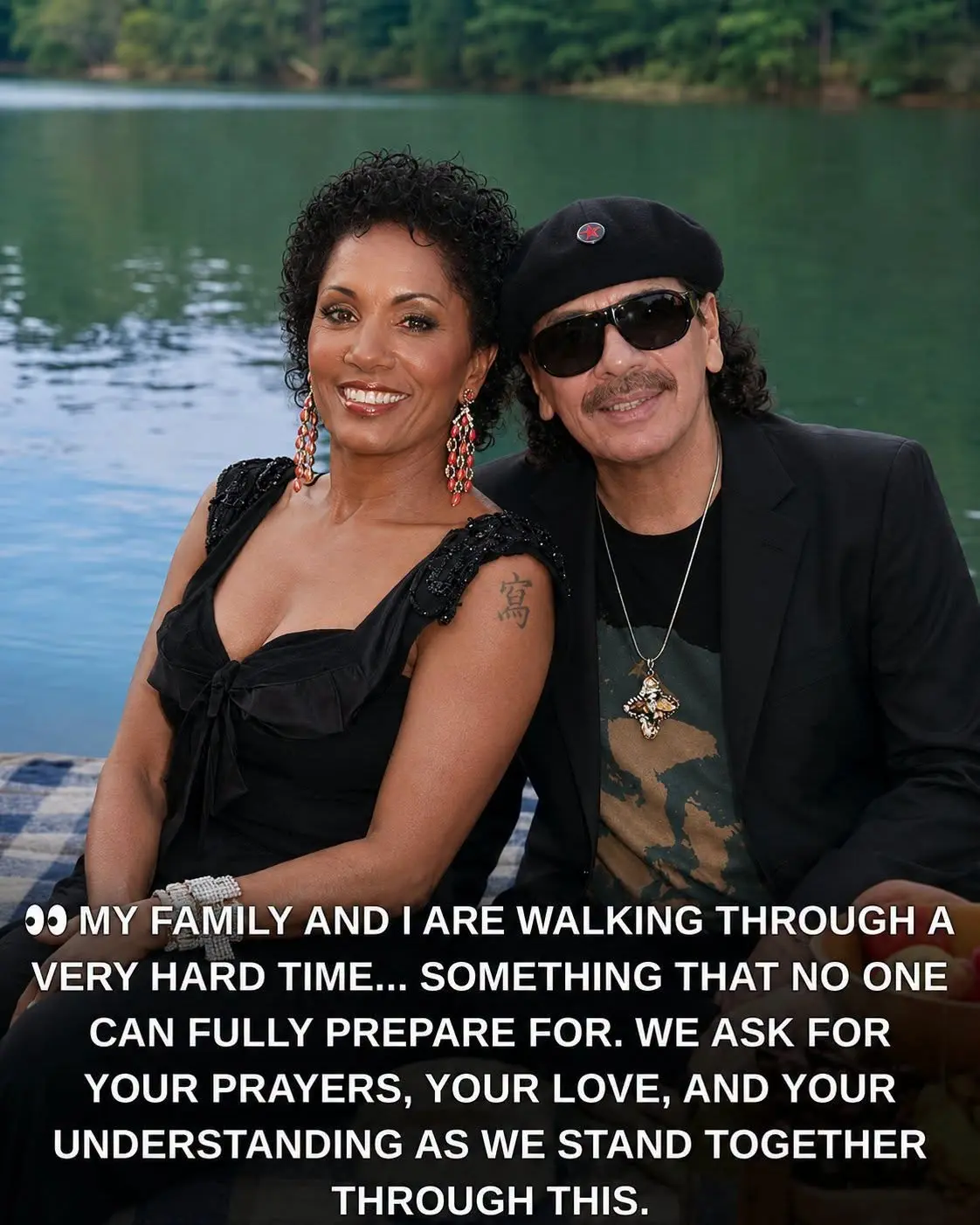
 Carlos and Cindy are not simply two people connected through marriage.