🚨🏀 FIBA THE GOLD MEDAL GAME CONFIRMED: TEAM USA VS. FRANCE — A CAN’T-MISS SHOWDOWN WITH THE WORLD CUP TITLE ON THE LINE! 🔥
Mark your calendar — this is The Gold Medal Game you simply won’t want to miss.
👇 TIP-OFF TIME, TV CHANNELS, LIVE STREAMING & FULL GAME DETAILS IN THE FIRST COMMENT.
Everything has led to this moment. Team USA and France have survived the pressure, adjustments and demanding stages of the tournament, and now only one game remains. There is no semifinal waiting afterward and no opportunity to recover from a difficult night. The winner takes the title and the gold medal.
For Indiana Fever supporters, the championship matchup puts Caitlin Clark under perhaps the brightest spotlight of the tournament. The Fever guard’s combination of extraordinary shooting range, passing vision and ability to accelerate an offense gives Team USA a unique weapon, but France represents the type of disciplined opponent capable of making every possession uncomfortable.
The first major battle will be pace.
Team USA can be devastating when defensive stops immediately become offense. A rebound can turn into an outlet pass within seconds. A steal near midcourt can create a fast break. One loose ball can suddenly produce an open three before France has organized its defense.
Clark is especially dangerous in those moments.
Her transition impact is not limited to scoring. She can recognize opportunities before defenders have established their assignments. A teammate sprinting toward the basket can receive a long pass. A shooter filling the wing can become an immediate option.
And if French defenders retreat too deeply toward the paint, Clark’s long-range shooting creates another problem.
France therefore needs to understand that stopping Team USA’s transition attack begins with its own offense.
Ball security will be critical.
A careless pass against Team USA is more than a wasted French possession. It could become American points seconds later.
Shot selection matters too. France cannot repeatedly take rushed attempts while leaving itself vulnerable at the opposite end.
If France can control the tempo and force Team USA into a half-court battle, the championship game becomes a very different tactical challenge.
That is where Clark’s shooting gravity could become one of Team USA’s most important advantages.
Clark can influence a defense without touching the basketball.
Because of her range, France cannot comfortably allow her defender to retreat toward the paint. That defender must remain connected farther from the basket.
The effect spreads throughout the floor.
Driving lanes become wider.
Cutters receive more room.
Interior players have additional space.
Help defenders must travel farther.
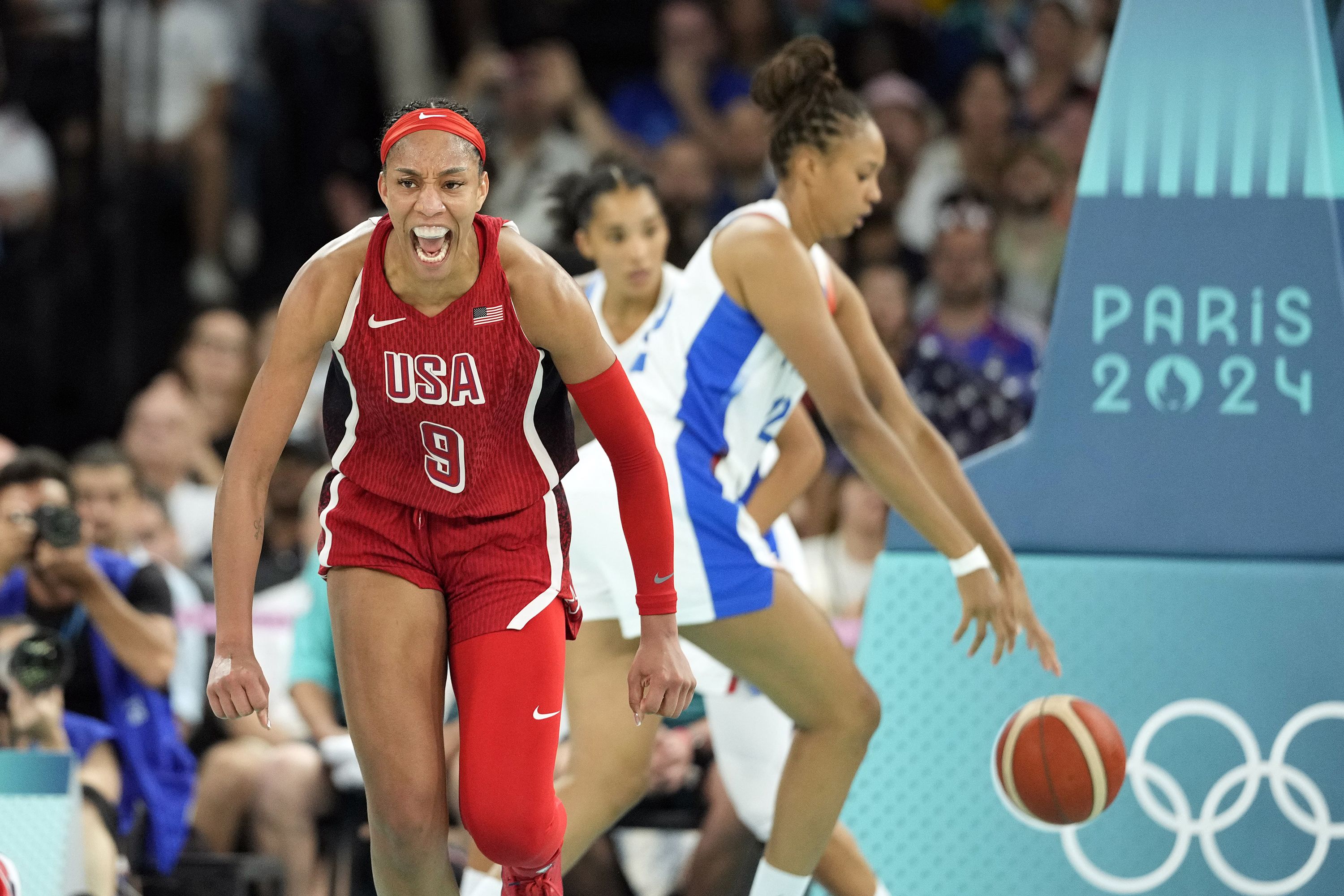
That is why Clark’s influence cannot always be measured simply by looking at her final point total.
If France devotes enormous defensive attention to her and another American player benefits from the resulting space, Clark has still changed the possession.
France could respond by aggressively trapping her around ball screens.
Indiana Fever supporters know this strategy extremely well.
WNBA opponents frequently send a second defender toward Clark in an attempt to force the basketball away from her before she can turn the corner.
France may see the same opportunity.
But every double-team creates a risk.
Two defenders committed toward Clark means Team USA should temporarily have an advantage somewhere else.
Clark needs to recognize the pressure early and deliver the first pass.
Then the Americans must attack immediately.
Drive toward the open space.
Find the shooter.
Make another pass.
Force France into another defensive rotation.
If Team USA hesitates, France can recover.
If the Americans move quickly, the French defense may spend the remainder of the possession scrambling.
That is why Clark’s decision-making could ultimately become as important as her famous shooting.
A deep three-pointer might become the highlight everyone remembers.
But a perfectly timed pass against a trap could create the possession that decides the championship.
Another fascinating element for Fever fans will be Clark’s activity without the basketball.
With Indiana, she naturally carries enormous responsibility as a primary creator. Playing alongside other talented ball-handlers gives her opportunities to become dangerous in different ways.
After passing, Clark can relocate behind the three-point line.
She can use an off-ball screen.
She can cut when her defender turns toward the basketball.
She can move across the court and suddenly appear in another shooting window.
France cannot relax simply because Clark gives up possession.
That development could become increasingly important for Indiana.
WNBA defenses will continue designing aggressive strategies around stopping Clark.
Trap her and she can pass before relocating.
Deny her initial touch and Indiana can initiate another action.
Switch against her and the Fever can attack the matchup.
Remain tightly connected to Clark and another player receives more space.
The objective is not merely to survive the attention she attracts. It is to transform that attention into an offensive advantage.
France will create serious problems at the opposite end as well.
Team USA cannot become so focused on pushing the pace that it sacrifices defensive discipline.
Perimeter defense could become a major variable.
If France establishes an early rhythm from three-point range, Team USA will have to extend its defense.
That creates longer closeouts.
Longer closeouts create driving opportunities.
The Americans need balance.
Close too slowly and France gets an open three.
Close too aggressively and the shooter can attack off the dribble.
Help defenders must remain connected behind the initial action.
Communication becomes essential.
Then comes another battle that could quietly decide the gold medal: rebounding.
A French miss does not automatically complete a successful defensive possession.
Team USA must secure the basketball.
Every offensive rebound gives France another opportunity to score while simultaneously preventing Clark from initiating transition offense.
For Team USA, defensive rebounding therefore becomes part of its offensive strategy.
France faces the opposite calculation.
Sending additional players toward the offensive glass could generate valuable second chances, but it also leaves fewer defenders available to retreat.
If Team USA secures the rebound, Clark can immediately scan the floor.
One outlet pass can suddenly turn French aggression on the offensive glass into an American transition opportunity.
Depth will matter too.
A gold-medal game demands extraordinary physical and mental energy.

Screens become more physical. Defensive pressure rises. Loose balls suddenly feel championship-defining. Every rotation player needs to remain completely engaged.
Team USA’s depth could become an advantage if the bench maintains the intensity established by the starters.
France cannot allow those minutes to become the point where the championship begins slipping away.
Momentum can change remarkably quickly against the Americans.
One turnover becomes a transition basket.
One defensive stop follows.
Then Clark or another shooter knocks down a three.
Within a minute, a close game can become a dangerous deficit.
France must prevent those avalanche runs.
Team USA must create them without becoming careless.
If the championship remains close entering the fourth quarter, every decision will become magnified.
Possessions may become slower.
Coaches will search for favorable matchups.
Defenses will become increasingly aggressive against primary creators.
That is where Clark’s ability to read coverage could become crucial.
If France traps, make the early pass.
If France switches, identify the matchup.
If defenders retreat, recognize the shooting opportunity.
If multiple defenders commit toward Clark, trust the teammate who becomes open.
The defining Clark moment might be a spectacular shot from near the logo.
But it could just as easily be a simple pass that forces France into rotation and eventually creates an uncontested basket elsewhere.
Mental composure could ultimately separate gold from silver.
There is no next game to correct mistakes.
One missed shot cannot become another rushed attempt.
One turnover cannot become a defensive breakdown.
One difficult possession cannot become an entire difficult quarter.
For Indiana Fever fans, those situations provide an especially compelling reason to follow Clark.
She already receives enormous defensive attention in the WNBA. Opponents trap her, deny her preferred spaces and attempt to make every possession physically exhausting.
A gold-medal environment offers another opportunity to sharpen the patience, recognition and decision-making required to solve those schemes.
So when Team USA and France take the floor, do not watch only Clark’s scoring total.
Watch where France begins defending her. Watch when the second defender arrives. Watch Clark’s first decision against pressure. Watch where she moves after giving up the basketball.
Most importantly, watch how France’s entire defensive structure changes because of the threat Clark represents.
Fans seeking the exact tip-off time, television channels and authorized live-streaming options should confirm the latest official FIBA and regional broadcaster listings for their market, as coverage can differ by location.
Once the opening tip arrives, however, everything becomes remarkably simple.
🇺🇸 Team USA vs. France 🇫🇷
The Gold Medal Game.
One final game.
One victory from gold.
For Caitlin Clark, it represents an opportunity to perform on the tournament’s ultimate stage. For Indiana Fever supporters, it is another chance to watch their star guard navigate pressure, physical defense and tactical adjustments when every possession carries championship weight and the gold medal is waiting at the final buzzer.